

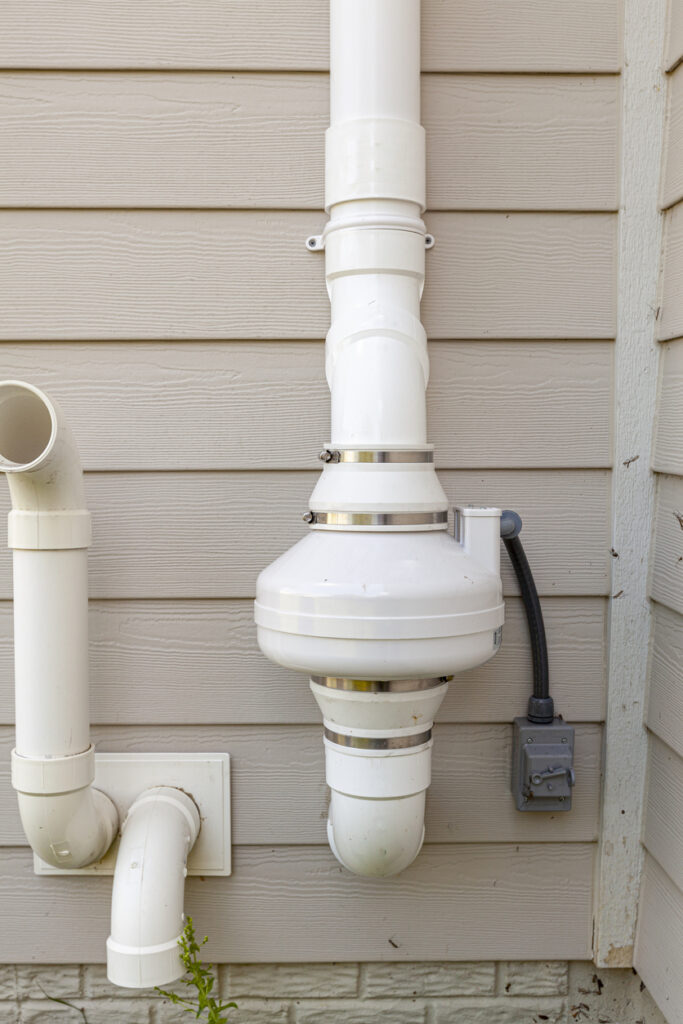
A radon mitigation system is a permanent ventilation solution designed to lower indoor radon concentrations and protect building occupants from exposure. At CABENO Environmental, we design and install systems that use advanced technology and proven methods to keep indoor air safe and compliant with environmental standards.
Understanding the Dangers of Radon
Radon is an invisible threat that can accumulate inside homes and commercial buildings without any immediate warning signs. It is a radioactive gas that is odorless and colorless. It seeps up from the soil through cracks in foundations and floors, often going unnoticed until levels become hazardous.
Radon gas forms naturally from the decay of uranium in soil and rock. When trapped indoors, it can reach unsafe levels that pose serious health risks. Long-term exposure is the second leading cause of lung cancer in the United States, according to the EPA.
The only way to determine whether a property has elevated radon levels is through professional testing. Once results confirm unsafe concentrations, mitigation becomes a necessary step to protect health and safety.
Radon Mitigation System Components
All radon mitigation systems operate on the same principle: capture radon gas from beneath or around a structure before it can enter, and vent it safely to the outdoors. The goal is to keep indoor air safe by preventing radon accumulation inside living or working spaces.
Most systems accomplish this by creating negative pressure beneath the foundation, pulling radon gas through a collection point, and channeling it outside. A typical system includes several key components:
-
Suction Points:
Openings drilled beneath the slab or into sump pits that collect radon gas from the soil.
-
Sealed Piping:
Airtight PVC pipes that transport the collected gas from below the structure to an exterior discharge point.
-
Inline Fan:
A continuously running fan (used in active systems) that maintains suction and directs the gas flow upward and out.
-
Exterior Vent:
The outlet, usually above the roofline, where radon gas is safely released into the atmosphere.
Not all systems require every component. For example, passive systems, which are often installed during new construction, rely on natural air movement rather than a powered fan. Likewise, crawlspace systems may use heavy vapor barriers instead of sub-slab suction points.
When properly designed and installed, these components work together to ensure radon is continuously drawn out of the building and vented harmlessly into the outdoor air.
Types of Radon Mitigation Systems
While every system is designed to reduce indoor radon levels, the configuration depends on foundation type, soil composition, and building layout. Common system types include:
-
Sub-Slab Depressurization:
The most common and effective method for homes or facilities with poured concrete foundations. It uses suction points below the slab to extract radon gas.
-
Sump-Based Systems:
Utilize an existing sump pump pit to collect and vent radon, reducing the need for additional drilling.
-
Crawlspace Ventilation:
Applies a sealed vapor barrier across the crawlspace floor and uses vent pipes or fans to remove trapped gases.
-
Sub-Membrane Depressurization:
Designed for unfinished basements or dirt floors, using a heavy plastic membrane to create a sealed collection zone.
Each property requires a tailored approach. CABENO Environmental evaluates soil conditions, foundation type, and radon test results to determine the most efficient and reliable mitigation system for long-term protection.
Why Professional Installation Matters
Installing a radon mitigation system is more complex than it appears. Proper airflow design, pressure balancing, and sealing are crucial for the system to function effectively. An improperly installed system may not only fail to reduce radon levels but can also increase energy costs or introduce moisture problems.
CABENO Environmental’s technicians follow EPA and state-mandated protocols and use advanced diagnostic tools to verify system performance. Every installation includes testing to confirm measurable reductions in indoor radon concentrations.
Learn more about radon mitigation systems at CABENO Environmental.
Contact CABENO Environmental for Radon Mitigation Services
Radon mitigation isn’t just about compliance. It’s about protecting health, safety, and peace of mind. Whether you’re a homeowner, property manager, or commercial operator, we will keep your air free of radon.
Still wondering “What is a mitigation system for radon?” Contact our team today to schedule radon testing or discuss custom mitigation solutions for your building.