

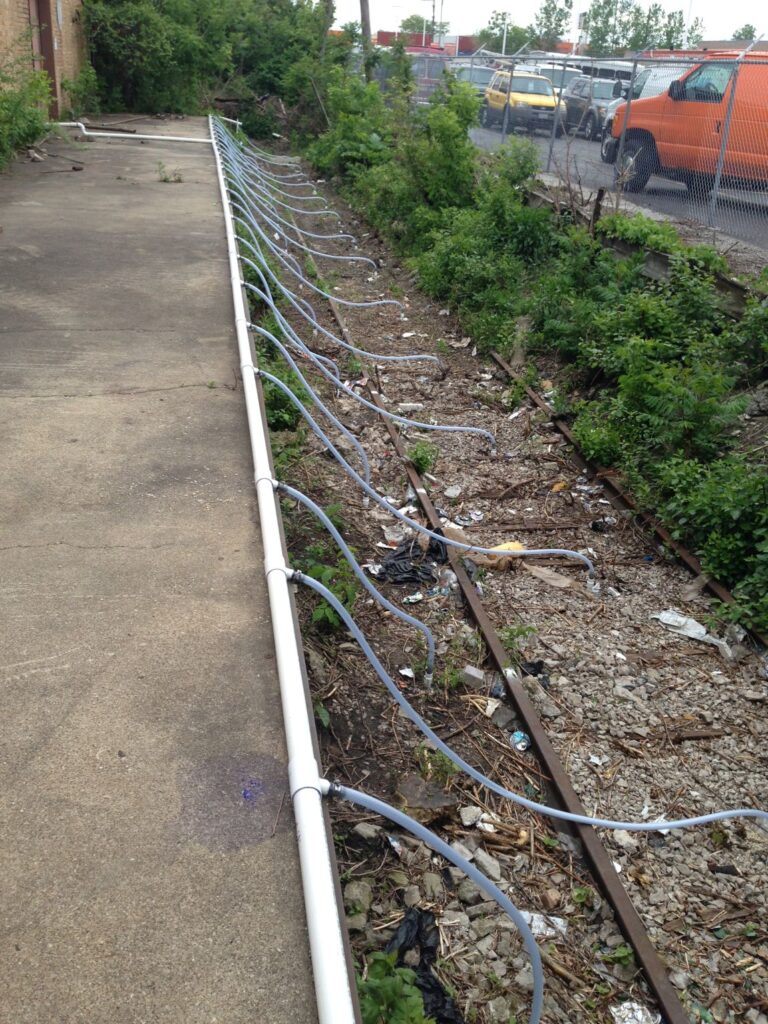
When most people think of environmental cleanup, they picture heavy excavators, dump trucks lining the street, and massive holes in the ground. While this traditional method (known as “dig and haul”) is still used, environmental management has evolved.
Today, many sites are cleaned up without a single truckload of soil leaving the property. This is achieved through in-situ remediation.
Defining the Term
The phrase in situ is Latin for “in place.”
Therefore, in-situ remediation refers to a collection of technologies that treat contamination right where it sits—underground—without excavating soil or pumping out groundwater for above-ground treatment. Instead of moving the waste to a treatment plant, in-situ methods bring the treatment plant to the waste.
The Core Difference: In-Situ vs. Ex-Situ
To understand in-situ, you must understand its opposite: ex-situ.
-
Ex-Situ (Out of Place):
Requires the physical removal of contaminated material. For soil, this means excavation and transport to a landfill. For water, this means “pump and treat” systems that pull water to the surface to filter it.
-
In-Situ (In Place):
Uses injection wells, augers, or vapor extraction points to destroy or neutralize contaminants underground. The surface often remains undisturbed.
What Does In-Situ Remediation Treat?
One common misconception is that in-situ remediation is only for groundwater. In reality, these technologies are designed to treat three distinct zones:
-
Soil (The Vadose Zone):
This is the “unsaturated” soil above the water table. Contaminants here are often trapped in the spaces between soil particles. In-situ methods strip these chemicals out before they can rain down into the groundwater.
-
Groundwater (The Saturated Zone):
When contaminants reach the water table, they form a “plume” that moves with the water flow. In-situ methods treat this plume to prevent it from migrating off-site.
-
Sediment:
Though less common, in-situ capping or treatment can be used to stabilize contaminated mud in riverbeds or harbors.
How It Works: The Three Main Approaches
How do you clean something buried 20 feet underground without touching it? Environmental engineers generally use one of three scientific mechanisms:
Biological Treatment (Bioremediation)
This method utilizes nature’s own cleaners: microbes. Certain bacteria naturally “eat” contaminants like petroleum or chlorinated solvents. In-situ bioremediation involves injecting “food” (amendments) into the ground to multiply these bacteria, accelerating the natural degradation of the waste.
Chemical Treatment (ISCO/ISCR)
For tougher, more concentrated contaminants, we use chemistry.
-
In-Situ Chemical Oxidation (ISCO):
Involves injecting powerful oxidants (like peroxide or ozone) that chemically destroy contaminants on contact.
-
In-Situ Chemical Reduction (ISCR):
Uses reductants (like Zero Valent Iron) to chemically break down toxic compounds.
Physical & Thermal Treatment
These methods use physics to move or mobilize contaminants.
-
Soil Vapor Extraction (SVE):
Applies a vacuum to the soil to pull volatile chemicals out in vapor form (similar to a radon mitigation system).
-
Thermal Remediation:
Heats the ground using electrodes or steam to boil contaminants out of the soil and groundwater.
The Business Case: Why Choose In-Situ?
While the science is fascinating, the decision to use in-situ remediation is usually driven by business and operational needs.
Eliminating “Double-Handling” Costs
Traditional excavation is expensive because you pay for the material multiple times: digging, transporting, landfill “tipping” fees, and importing clean backfill. In-situ remediation removes these line items, often resulting in significant cost savings for large-volume sites.
Operational Continuity
This is often the deciding factor for active businesses. Because the treatment occurs underground via small wells or injection points, surface operations—like factories, gas stations, or retail parking lots—can often remain open and functional during the cleanup.
Destroying Liability
When you dig up hazardous waste and truck it to a landfill, you retain “cradle-to-grave” liability for that waste. If the landfill leaks twenty years later, you could still be liable. In-situ remediation aims to destroy the contaminant. By converting the waste into harmless byproducts (like water and CO2), you eliminate the long-term legal liability rather than just moving it.
Is In-Situ Right for Your Site?
In-situ remediation is the standard for modern cleanups, but it requires expert diagnosis. Factors like soil density (clay vs. sand), contaminant type, and depth all dictate which technology will work.
CABENO Environmental specializes in diagnosing these factors and implementing the most effective in-situ strategy for your specific challenges.
Contact CABENO today to evaluate if our approach to in-situ remediation can save you time, money, and liability on your project.