

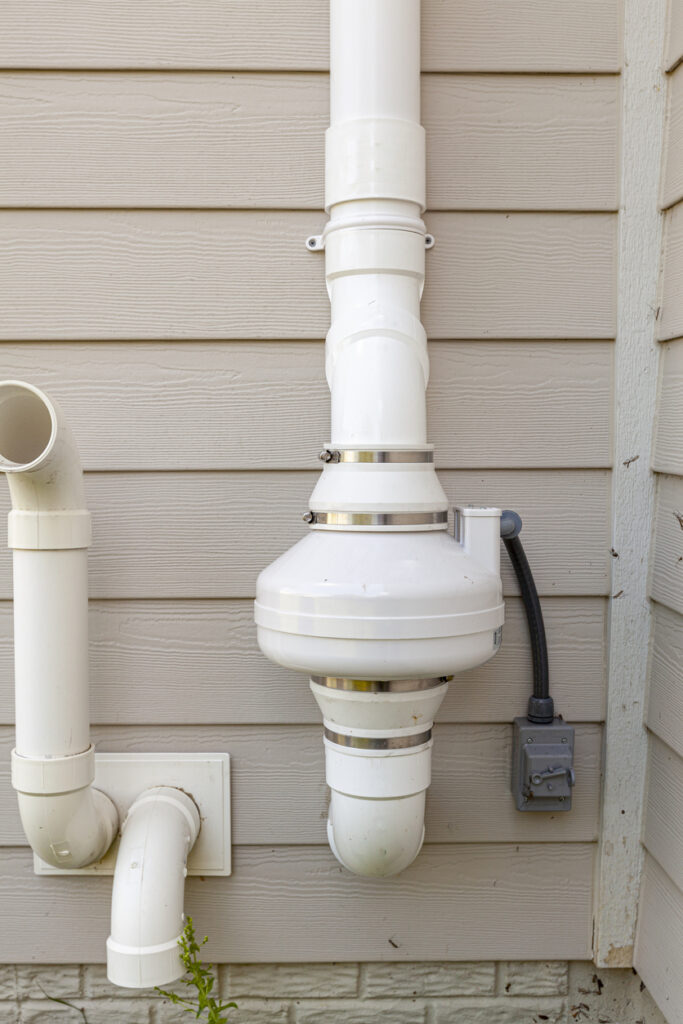
A radon mitigation system is a permanent ventilation or barrier solution designed to lower indoor radon concentrations and protect building occupants from exposure. At CABENO Environmental, we design and install systems that use advanced technology and proven methods to keep indoor air safe and compliant with environmental standards.
Understanding the Dangers of Radon
Radon is an invisible threat that can accumulate inside homes, commercial buildings, and industrial facilities without any immediate warning signs. This radioactive gas, which is naturally occurring, forms from the decay of uranium in soil and rock. Because it is odorless and colorless, it easily seeps up through foundation cracks and floors unnoticed.
When trapped indoors, radon can reach hazardous levels. In fact, the EPA notes that the second most common cause of lung cancer in the United States is radon exposure. The EPA recommends taking corrective action when radon levels reach or exceed 4.0 pCi/L. Once testing confirms elevated concentrations, installing a specialized radon system is the only reliable way to protect the health and safety of the building’s occupants.
Active vs. Passive Radon Systems
When exploring how to fix high radon levels, you will generally encounter two main categories of mitigation: active and passive.
-
Passive Radon Systems
These systems rely on natural air pressure and thermal bypass to draw radon gas out of the soil and route it through a vent pipe to the roof. They do not use electrical fans.
-
Active Radon Systems
If a passive system is not enough to lower radon levels, or if the building is an existing structure with high concentrations, an active system is required. Active systems use a continuously running electrical fan to mechanically pull the gas from the soil and force it safely outdoors.
What Is a Radon Prevention System?
You will often hear the term radon prevention system used interchangeably with mitigation, but they actually refer to different phases of a building’s life.
A prevention system, often referred to in the industry as Radon-Resistant New Construction (RRNC), is installed before the building’s foundation is completely finished. Rather than trying to fix a radon problem after the concrete is poured, builders and environmental contractors install preventative measures to block the gas from ever entering the structure.
A standard radon prevention system typically includes:
-
A Permeable Layer
A layer of clean gravel is laid beneath the slab to allow soil gases to move freely beneath the house.
-
A Heavy-Duty Vapor Barrier
Before the concrete is poured, heavy plastic sheeting or a commercial-grade membrane is installed over the gravel. At CABENO, we frequently utilize CETCO LIQUID BOOT®, a seamless, spray-applied barrier that bonds directly to structural surfaces to completely block radon and volatile organic compounds (VOCs).
-
Rough-In Piping
A PVC pipe is inserted through the vapor barrier and routed up through the building’s walls to the roof, acting as a passive vent.
If testing shows elevated radon levels after the building is completed, this passive prevention system can be easily converted into an active mitigation system by simply adding an inline fan.
Key Components of an Active Radon System
All active radon mitigation systems operate on the principle of sub-slab depressurization. The goal is to create negative pressure beneath the foundation, pull the gas through a collection point, and channel it outside.
To achieve this, a typical active radon system relies on several specific mechanical components:
-
Suction Points
Openings drilled beneath the slab or into sump pits that serve as the collection zone for the radioactive gas.
-
Sealed PVC Piping
Airtight pipes that route the collected gas from beneath the structure directly to the exterior.
-
The Inline Fan
The heart of an active system. This continuously running fan is typically installed in an attic or on the exterior of the building to safely pull the gas upward.
-
The U-Tube Manometer
A vital visual gauge installed on the PVC pipe. It contains a liquid that shifts based on air pressure, allowing property owners to easily verify that the system’s fan is running and creating the necessary suction.
-
Exterior Vent
The final discharge point, located safely above the roofline, where the gas is expelled into the atmosphere.
When properly designed, these components work in unison to continuously extract radon from the soil and vent it harmlessly away from your living or working spaces.
Types of Radon Mitigation Systems
Because every property features unique construction, soil composition, and building layouts, your radon system must be tailored to your specific foundation. Common system configurations include:
-
Sub-Slab Depressurization
The most common and effective method for homes or facilities with poured concrete foundations. It uses suction points below the slab to actively extract radon gas.
-
Sump-Based Systems
These systems utilize an existing sump pump pit to collect and vent the radon, effectively reducing the need for additional foundation drilling.
-
Sub-Membrane Depressurization (Crawlspaces)
Designed for unfinished basements, dirt floors, or crawlspaces. This involves sealing the exposed dirt with a durable vapor barrier and using a fan system to pull the trapped gases from beneath the plastic.
By assessing your foundation type and local soil conditions, environmental contractors can ensure that the exact right system is installed for maximum long-term efficiency.
Why Professional Installation Matters for Radon Systems
Installing a radon system is highly complex. Proper airflow design, pressure balancing, and meticulous sealing are critical. An improperly installed system may fail to reduce radon levels, introduce moisture problems, or cause your energy bills to spike due to conditioned air being sucked out of the building.
CABENO Environmental’s technicians follow strict EPA and state-mandated protocols, utilizing advanced diagnostic tools to verify system performance.
Contact CABENO Environmental for Radon Solutions
Radon mitigation isn’t just about regulatory compliance; it’s about protecting the health and peace of mind of everyone inside the building. Whether you need a commercial vapor barrier applied during new construction or an active sub-slab system installed in an existing property, we have the expertise to keep your air safe.
Learn more about the Radon & Vapor Mitigation Services at CABENO Environmental.
Still wondering how to protect your property from hazardous soil gases? Contact our team today to schedule professional testing or discuss a custom mitigation strategy for your building.