

Key Takeaways
- The Risk: Old factories often have invisible chemical vapors rising from the soil.
- The Regulation: Environmental agencies often require a mitigation system to grant regulatory closure.
- The Strategy: Installing a system during construction avoids the nightmare of retrofitting an occupied building later.
In the commercial real estate market, “Adaptive Reuse” is a dominant strategy. Developers are snapping up old manufacturing plants and warehouses to convert them into trendy lofts, mixed-use retail, and offices.
But these historic buildings often come with a hidden ghost: vapor intrusion.
For developers, this presents a choice. You can install a mitigation system now, while the floor is exposed. Or, you can wait until a tenant complains of headaches, forcing you to retrofit a system while facing a potential lawsuit.
Here is why proactive vapor intrusion mitigation is the only smart financial play for commercial properties.
What Is Vapor Intrusion?
Just like radon, dangerous gases can rise from the soil and seep through cracks in your foundation. But unlike radon, these vapors come from man-made chemicals left behind by previous industrial tenants, like dry cleaners, metal shops, or printers.
Why does this matter?
Most state environmental agencies require you to prove the “indoor inhalation pathway” is safe before issuing a regulatory closure letter (often called an NFR or No Further Action letter). Without this sign-off, most lenders will not finance the property.
The Logistics of Waiting: During Renovation vs. Post-Occupancy
The biggest mistake we see developers make is “hoping” the vapors won’t be an issue.
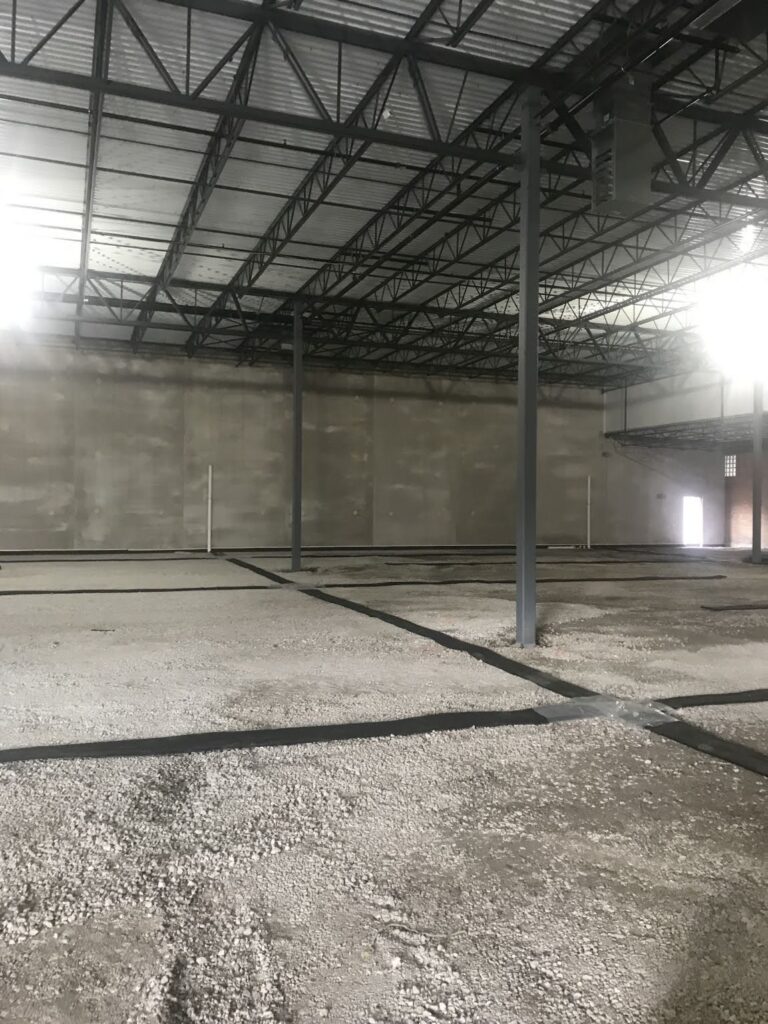
In an adaptive reuse project, you have a golden window of opportunity. Even if you aren’t pouring a brand new slab, you are likely cutting trenches for new plumbing or electrical. We can install our system right alongside those utilities.
If you miss this window and wait until tenants move in, the job becomes exponentially harder.
Comparison: Doing it Now vs. Doing it Later
| Feature | During Renovation (The Smart Way) | Post-Occupancy (The Hard Way) |
| Complexity | Integrated. We work alongside your plumbers and graders. | Difficult. Requires drilling through finished floors. |
| Aesthetics | Invisible. Piping hidden in open walls/chases. | Intrusive. Piping often visible on building exterior. |
| Disruption | Zero. Happens while the building is empty. | High. Tenants may need to be relocated. |
| Overall Cost | Efficient. Shared labor/access costs. | Expensive. (Demolition + Repair + Lost Rent) |
The Legal Risk: Liability & Tenant Health
Beyond the construction headaches, there is a legal reality. Commercial leases and tenant protection laws are increasingly strict regarding indoor air quality.
If a tenant discovers high levels of vapors in their unit, they can often:
- Break their lease.
- Sue for damages (health issues).
- Trigger a public relations nightmare for your brand.
A proactive vapor intrusion mitigation system is your best insurance policy. It proves you took state-of-the-art measures to protect your occupants from recognized environmental conditions.
Don’t Let Vapors Derail Your Development
If you are converting an industrial property, you are likely sitting on a vapor risk. Addressing it now is a simple construction line item, while addressing it later will likely be more challenging. At CABENO Environmental, we work directly with general contractors throughout the Midwest to install systems that are effective, compliant, and invisible.
Protect your investment and your future tenants. Call us today or schedule a consultation online.